
Jack McCurdy ·
The not-so-secret sauce for being successful with a virtual teammate
We’ve moved beyond copilots. A copilot sits alongside you as you fly. It helps you navigate your work, whether it’s offering suggestions as a sparring partner or building configuration. A virtual teammate is different. A virtual teammate takes a task, asks for clarification if needed, and turns it into output. When adopting a virtual teammate you transform from user of a tool to manager of a worker.
A virtual teammate operates no differently than a junior teammate would. That means successfully implementing virtual teammates into our workflows hinges on one thing, effective management skills.
The management skills that we need aren’t new and we do many of them instinctively, without recognizing what we’re doing. I’m talking, of course, about human skills. Skills that are inherent to us: how we act, how we think, the things that make us “us”.
Skills for everyone, but unique to humans
Everyone has met the person to whom leadership seems effortless. But no one is automatically great at it. Some of the skills might come more naturally than others but it takes intentional work and focus to develop exceptional leadership. So, the good news for the rest of us is that with a little bit of consideration and mindfulness, we can be great at it too.
You may be thinking human skills are the “soft skills” we’re familiar with. Personally I think “soft skills” is a pretty misleading term for them. They’re hard skills. They take a lot of effort, especially when you consider that to be traditionally “good” at soft skills, we each individually work against what nature may have given us. For example, introverts, which many of us in tech are, can find communication and collaboration draining.
However, my perspective is that human skills, while seemingly similar, are subtly different. In some instances they’re a combination of soft skills, and they are absolutely essential in an age of working together with colleagues and managing virtual teammates.
The key human skills for effective management
While there are more, these are the four human skills that I think make the biggest difference in teams. Developing these skills and functioning in these areas enable us to manage virtual teammates effectively, and are essential to applying management frameworks.
Context
Context, quite possibly the word of the last two years. Agents are great at context, pointing an agent at your org will give you intelligent insights in an instant, as opposed to digging for hours yourself. Every object, field and flow, and what config touches what.
However, there is always context around the context. For example, why does Salesforce exist at your company? Who depends on it? How do teams use it? What outcomes is Salesforce tied to? And what does that validation rule that makes no sense really protect?
These are questions that an agent can’t answer. It can tell you what exists, maybe even how it got there if documentation isn’t outdated. It doesn’t know that 5 years ago there was a compliance scare that’s still on everyone’s minds and the reason that validation rule exists.
Shared context lives in humans across a business. Systems show only one side of the story. The context we have, and maintain in our heads naturally, is the difference between a technically correct change and the right one for the business.
Stakeholder relationships
Salesforce sprawls across organizations. Sales, service, finance, marketing, everyone has a stake and claim to some aspect of the system. Each ticket, each request, comes from a person with a different lens. Sometimes those lenses all point towards a shared objective, sometimes not. And those requests come with pressure, and context, that isn’t written in Jira.
Understanding the people behind requests has always been valuable, and is arguably more so now. The best Salesforce teams I’ve worked with have a deep focus on the humans they serve, how they work, and then translate that to technical solutions.
When we introduce a virtual teammate to our workflow, relationships become load-bearing because things will go wrong sometimes, just like they do without AI, only this time faster. When they do, the goodwill you’ve bought by investing in those relationships buys patience, honest feedback, and a second chance to fix it.
Working with a virtual teammate requires accountability. It’s no good blaming AI for when things go wrong, you yourself need to own the outcome. Trust between you and the people you work with is a prerequisite to being able to realize the efficiency and speed gains of AI.
Sales
It’s common for some folks to have a visceral reaction to sales people. I’ve got news for you, though. We’re all in sales! As a recovering salesperson, it’s my perspective that sales is based on three things: discovery, solutioning, and value creation. Is this not the core tenet of every Salesforce professional?
If we get to the root of what every one of our teams is trying to solve and their job to be done (discovery), we can build the business logic or components needed to solve it with Salesforce (solutioning), and pitch that solution back to the stakeholders (value creation), which probably isn’t the checkbox that they asked for. Getting great at selling is how you turn your Salesforce strategy into Salesforce adoption, the core metric for anything we build on the platform.
Interpretation
AI is fantastic at pattern matching. It’s great at analyzing reports and large swathes of data. However, it has been known to paper over important details.
A simple example recently was when users would ask AI “The car wash is 100m from my house, should I walk or drive?”. For a while, AI would respond “walk”, owing to the car wash being so close. While this doesn’t happen anymore, it does shed light on how humans interpret situations differently to AI.
A Salesforce org is full of these types of “car wash” questions. Requests that while technically clear are ambiguous and require investigation, thought and interpretation. Humans are also much better at recognizing that correlation does not imply causation and that an outcome can have multiple causes.
Valuable in isolation, exponential together
What I hope you’ve picked up from these four human skills is that they’re all valuable standing on their own. What really accelerates performance is understanding that they are intertwined, and that you can pick any starting point to develop the others. Focusing on sales gives you better context, and vice versa. Focussing on relationships allows you to interpret successfully across individual ambiguity.
Where you start is far less important than actually starting.
Applying a management framework to your virtual teammate
There are many management frameworks out there, but I like the Eisenhower Matrix. It’s simple, easy to understand, and highlights where virtual teammates are really valuable. Just because AI is new doesn’t mean we need new frameworks.
The Eisenhower matrix sorts work by urgency and importance, with four decisions to make.
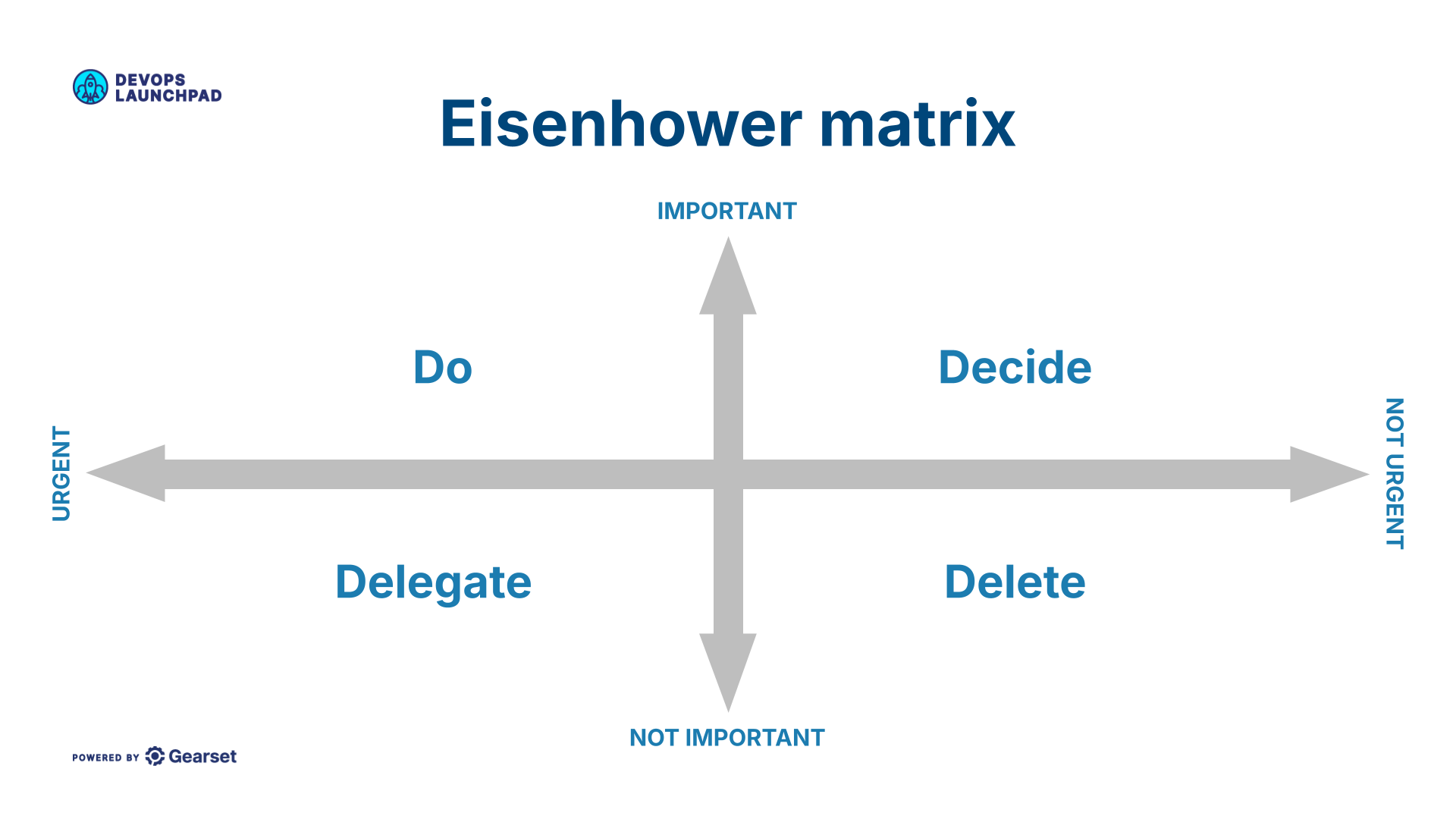
Virtual teammates slot naturally into “delegate”, urgent but less important work that takes up admins’ and developers’ time. It’s not uncommon for me to speak to teams that spend 80% or more of their time here. So, agents are fantastic to free up time here.
The real victory is the top-right quadrant, “decide”. Decide is where context, strategy, and governance reside and is the box that lays waste to “Do”: firefighting, urgent requests, and keeping business running as usual. Your virtual teammate should free up time for this quadrant, but it can only do that if you give it everything you need to be successful.
It’s also important to not overlook “delete”. When the cost of doing things becomes “cheap”, it’s tempting to do everything. It’s easier than ever to make changes that, when you boil it all down, aren’t necessary. After all, the cheapest, easiest change to manage is the one that was never made at all.
Be the ligaments
If Salesforce is the skeleton of your business, and AI is new muscle, then you and your human skills are the ligaments. Ligaments don’t get much attention, but they are critical. They connect the bones, stabilize joints, and hold everything together to prevent falling apart. Adding more muscle gives you strength, but without strong ligaments you get injured.
This is where, and why, human skills are critical to your success.
Keep learning
Managing virtual teammates well comes down to skills that take deliberate practice. If you want to keep building them, here’s where to go next.
Build your leadership foundations. Delegating to a virtual teammate is a leadership challenge, and the same principles apply whether you’re leading people, agents, or both. The free Salesforce DevOps Leadership Certification covers transformational leadership, building a high-performing team culture, measuring performance with DORA metrics, governance, and guiding your team through change.
See how the human role shifts as agents take on more. Listen back to the webinar More output, same control: How Salesforce leaders embrace AI to understand the delivery foundations you need to have in place before you accelerate with AI.
Hear where the admin role is heading from Mike Gerholdt about how the role of admins is shifting and why hoarding knowledge does your org (and you) a disservice.